SALT-CLCP
The way into this process begins with SALT. SALT is not just an acronym—though it stands for Support, Appreciate, Listen/Learn, and Transfer/Team—it is a way of being with people. Our facilitators, who come from within the community itself, visit families and groups not as experts with ready-made answers, but as companions who want to listen to their stories. They ask about moments of pride, they notice strengths, and they appreciate what is already working. Slowly, trust grows. Over time, the community’s perspective shifts: instead of focusing only on challenges, they begin to recognize their own strengths and realize that, together, they have the power to address these challenges.
From there, the journey unfolds in stages.
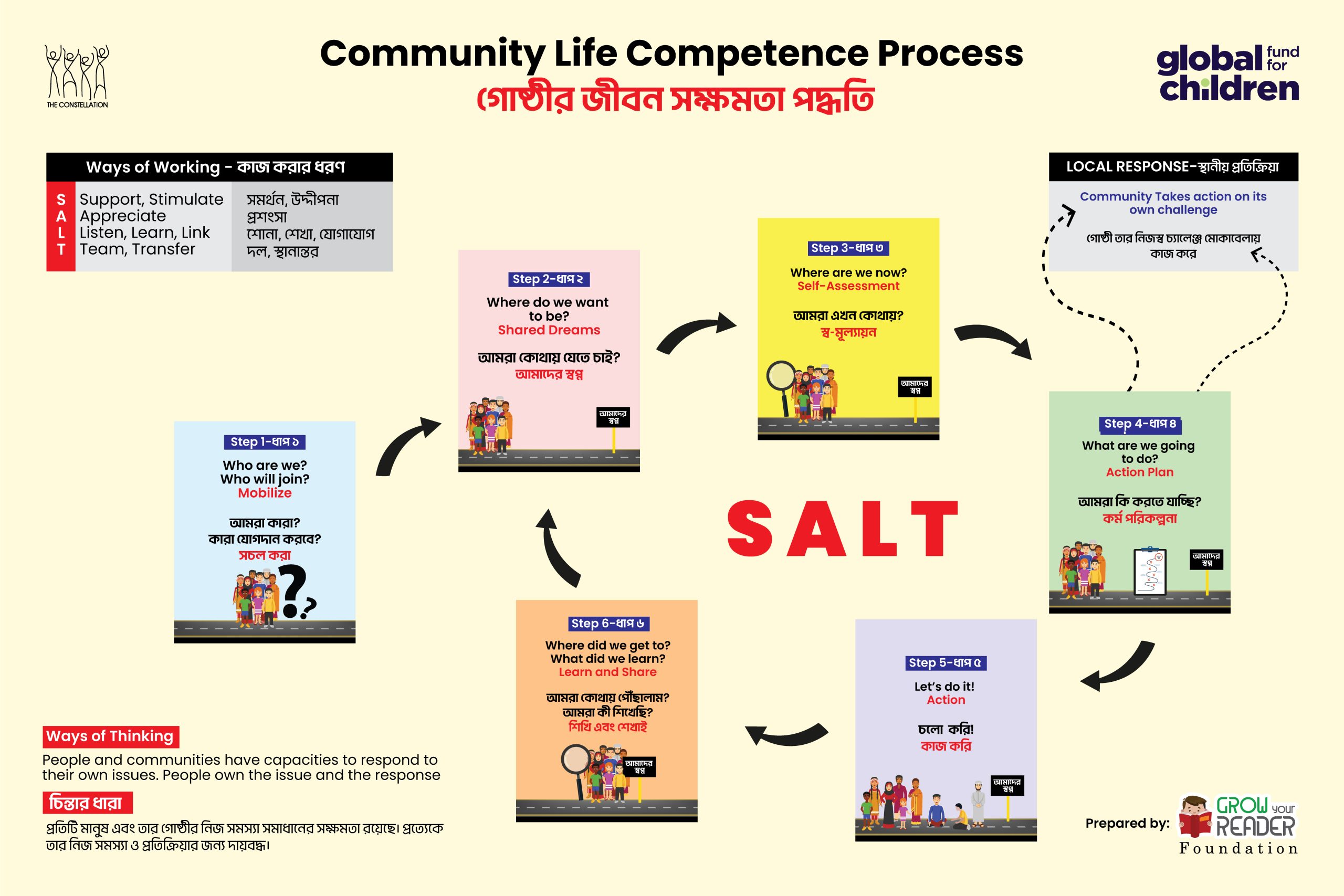
Shared Dreams

Next comes the most powerful step: the Shared Dream. In circles of conversation, people imagine together what they wish for their children, their families, their community or their village. They gather to look beyond today’s challenges and dare to picture tomorrow’s possibilities.
Self-Assessment

This dream does not remain vague or distant, because the community soon asks: Where are we now, compared to where we want to be? With a simple self-assessment tool, they measure their dreams honestly by themselves, and this clarity helps them decide what actions to take. In traditional MEL (Monitoring, Evaluation, and Learning) communities are not active participants. Instead, outsiders—such as project managers, evaluators, or NGOs—set the rules, collect the data, and assess the results. The community’s role is limited to providing information, rather than helping shape the evaluation or reflect on their own progress. It focuses on numbers, reports, and accountability to outsiders, rather than fostering accountability within the community itself. In contrast, this self-assessment is not just a task—it’s a realization. It’s about communities reflecting together, holding themselves accountable with honesty and care, and understanding their own progress in a way that feels meaningful to them.
Action Plan

After doing the self-assessment of their dream, the community then makes its Action Plan to solve their own challenges. These are not plans imposed from outside—they are designed by the people themselves, using their own strengths. Small steps lead to bigger ones.
Action
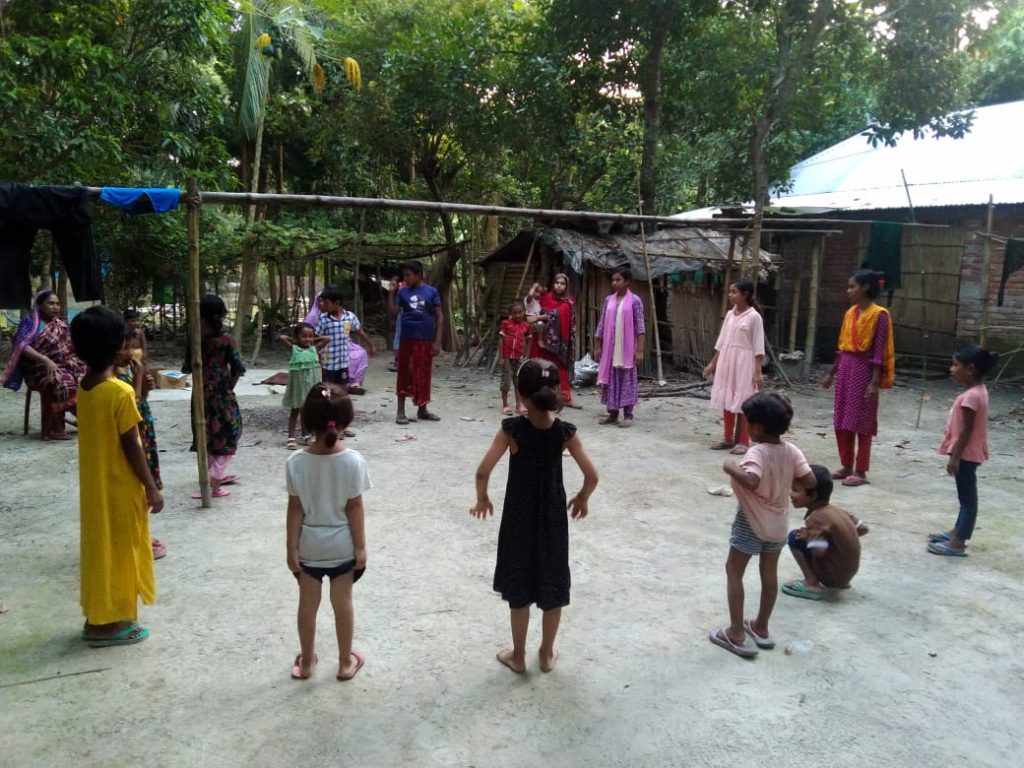
After planning actions, the community immediately starts their actions. And when they face obstacles, the dream and the trust they built keep them moving forward. The beauty of SALT-CLCP is that the cycle never truly ends. After taking action, communities come together again to reflect, to see what worked, what didn’t, how to improve and how their habits have begun to change. This reflection helps them recognize the small but powerful shifts in daily behaviors—the main expectation of the ARC initiative.
Learn and Share
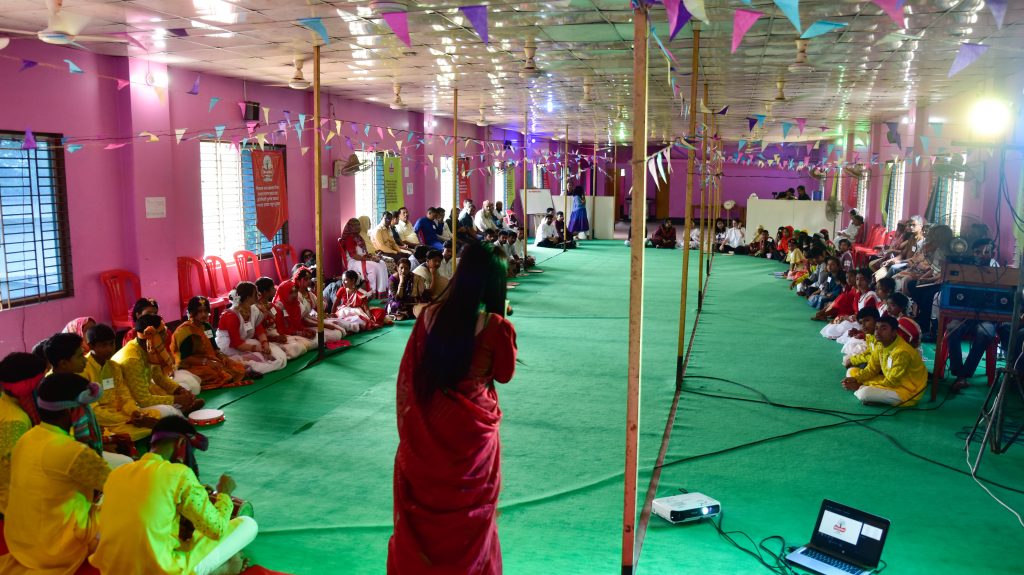
Through knowledge fairs, gatherings, and exchanges, they share these changes and learnings with others, connect with neighboring groups and inspire new actions. In this way, learning flows in all directions, and every change in habit sparks a fresh cycle of growth and transformation.
Mobilize

First, individuals reflect on their own strengths—this is what we call Individual SALT. Then people with similar challenges come together, share their proud stories, and discover each other’s strengths through appreciation—this becomes Group SALT. When strengths are seen and appreciated, a sense of unity emerges.